At Excelbeyondborders, we know that financing international studies can be challenging. Government student loans for international study offer a viable solution for many aspiring global scholars.
These loans can make your dream of studying abroad a reality, providing financial support for tuition, living expenses, and travel costs. In this post, we’ll explore the types of government loans available, eligibility requirements, and how to navigate the application process.
What Government Loans Are Available for International Study?
Financing your international education can seem overwhelming, but several government loan options can help turn your study abroad dreams into reality. Let’s explore the main types of government loans and grants available for international study.
Federal Direct Loans
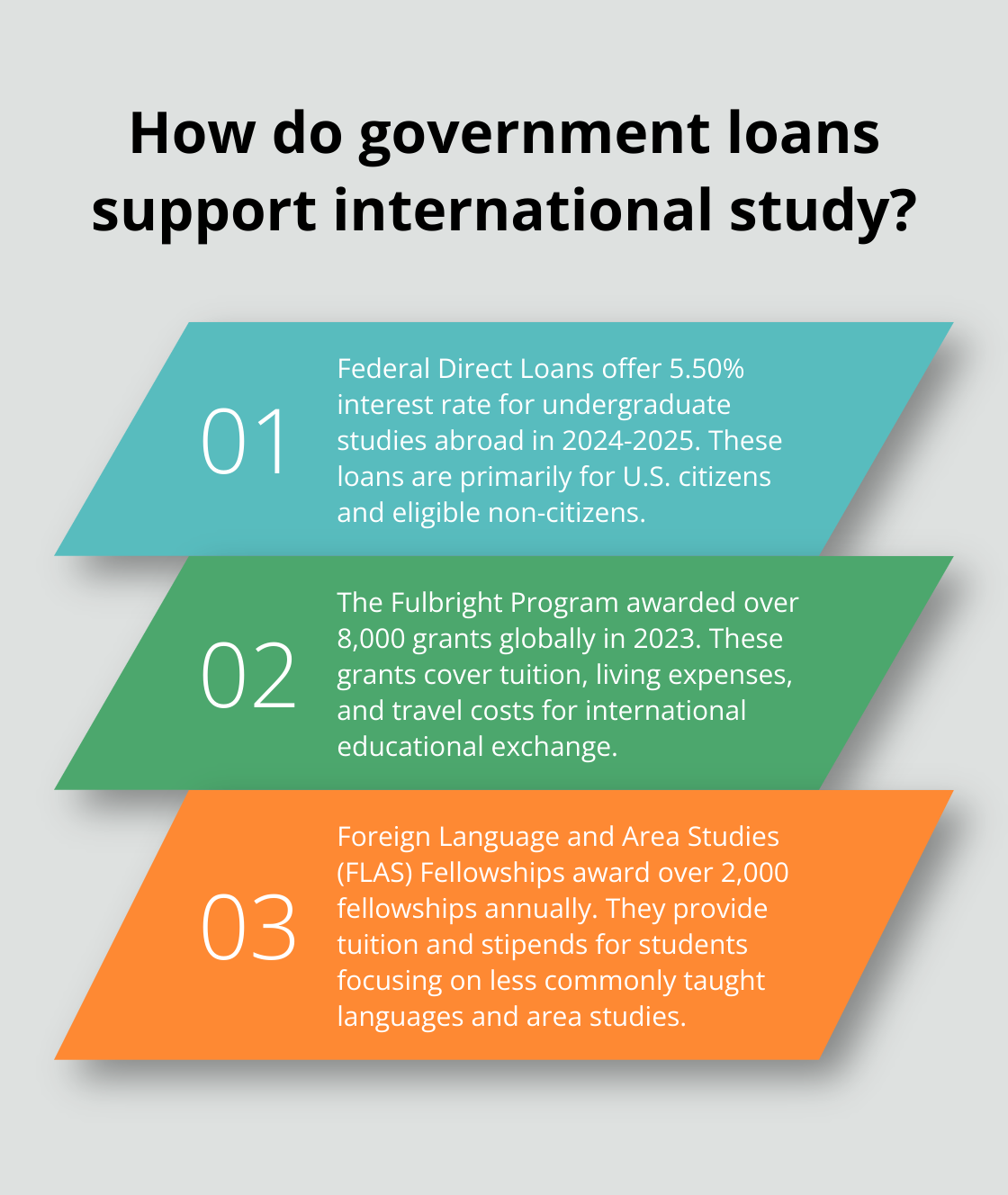
The U.S. Department of Education offers Direct Subsidized and Unsubsidized Loans for eligible students. These loans apply to study abroad programs approved by U.S. institutions. For the 2024-2025 academic year, undergraduate Direct Loans have a 5.50% interest rate. These loans primarily serve U.S. citizens and eligible non-citizens.
Fulbright Program Grants
The U.S. Department of State sponsors the Fulbright Program, which provides grants for international educational exchange. These grants cover tuition, living expenses, and travel costs. In 2023, the program awarded over 8,000 grants globally. While competition for Fulbright grants is fierce, they offer substantial financial support (and prestige).
Foreign Language and Area Studies Fellowships
The Foreign Language and Area Studies (FLAS) Fellowships cater to students focusing on less commonly taught languages and area studies. The U.S. Department of Education funds these fellowships, which provide tuition and a stipend for both undergraduate and graduate students. Recent years have seen over 2,000 fellowships awarded annually.
Benjamin A. Gilman International Scholarship Program
The Gilman Scholarship Program aims to diversify the pool of students who study abroad. It offers awards of $5,000 to be used toward the cost of study abroad or international internship programs. Students who study critical need languages can receive additional funding. Since its inception in 2001, the program has awarded scholarships to over 36,000 students.
These government loans and grants can significantly reduce the financial burden of international study. However, it’s important to explore multiple funding sources. The application process for these programs often involves specific deadlines and requirements, so early preparation is key.
As we move forward, let’s examine the eligibility requirements for these government loans to help you determine which options best suit your situation.
Who Can Get Government Loans for International Study?
Citizenship and Residency Requirements
Most U.S. government loans for international study restrict eligibility to U.S. citizens or eligible non-citizens. The Federal Direct Loan program requires borrowers to fill out a FAFSA form before receiving federal student aid to study abroad. Permanent residents with a green card typically qualify as eligible non-citizens.
International students studying in the U.S. usually don’t qualify for federal loans. However, some programs (like the Fulbright Foreign Student Program) cater specifically to non-U.S. citizens looking to study in the United States.
Academic Qualifications
Your academic standing plays a significant role in loan eligibility. Most government loan programs require students to maintain satisfactory academic progress. This often means maintaining a minimum GPA (usually around 2.0 on a 4.0 scale) and completing a certain percentage of attempted credits each term.
For graduate-level loans and fellowships, like the Foreign Language and Area Studies (FLAS) Fellowships, a bachelor’s degree is typically a prerequisite. Some programs may have more stringent academic requirements. The Fulbright Program, for example, often seeks candidates with exceptional academic records.
Financial Need Assessment
Many government loan programs consider your financial need. The Free Application for Federal Student Aid (FAFSA) serves as the primary tool to determine financial need for federal loans. It considers factors like your family’s income, assets, and the cost of attendance at your chosen institution.
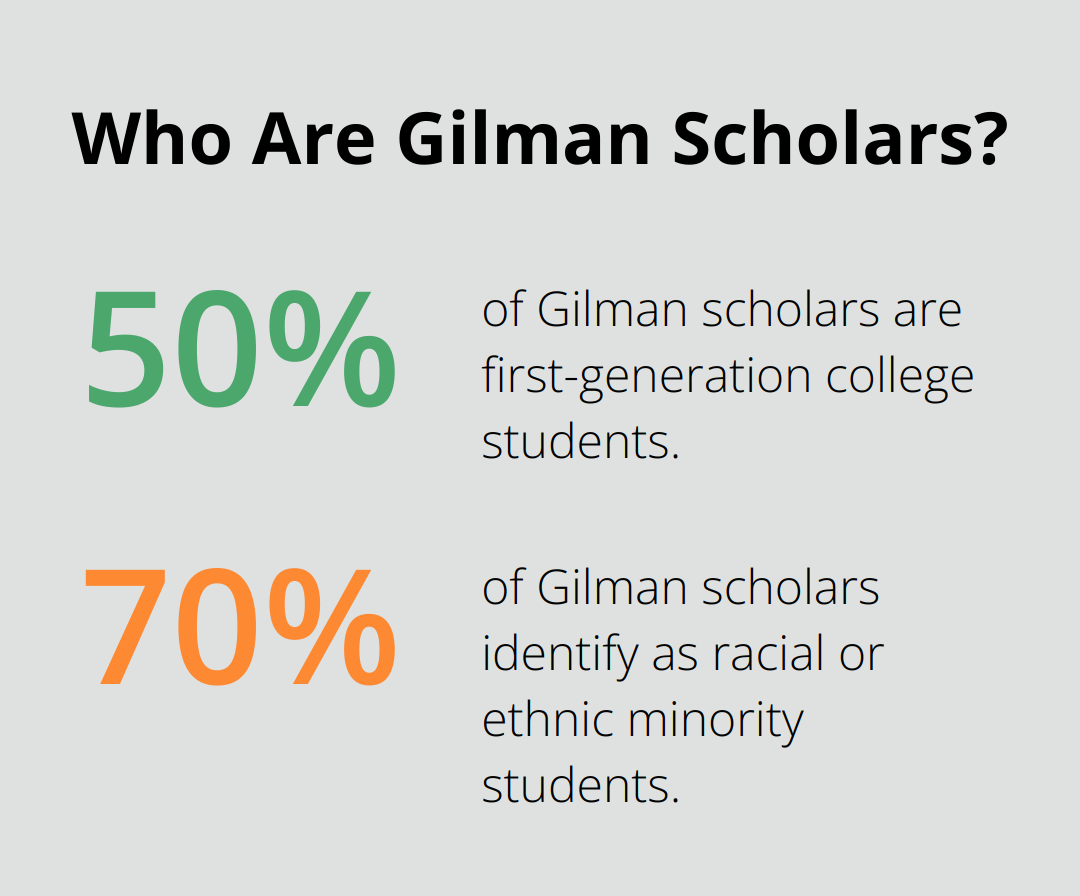
Some programs, like the Benjamin A. Gilman International Scholarship, specifically target students with high financial need. Nearly 50% of Gilman scholars are first-generation college students, and nearly 70% identify as racial or ethnic minority students, highlighting the program’s focus on expanding access to international education.
Program and Institution Restrictions
The type of program you pursue and the institution you attend can affect your eligibility for government loans. For Federal Direct Loans, your chosen study abroad program must receive approval from a U.S. institution participating in the federal student aid program.
Certain loans and scholarships may have specific field of study requirements. The FLAS Fellowships, for instance, gear towards students studying less commonly taught languages and related area studies.
Navigating these eligibility requirements can present challenges. Excel Beyond Borders offers a Student Application Service to help identify which government loan programs you qualify for and guide you through the application process. We’ve assisted numerous students in securing financial aid, reducing the time and stress involved in the process.
Understanding these eligibility criteria marks just the first step in your journey. The next chapter will outline the application process for government loans, providing you with practical tips to increase your chances of success.
How to Apply for Government Loans
Complete the FAFSA
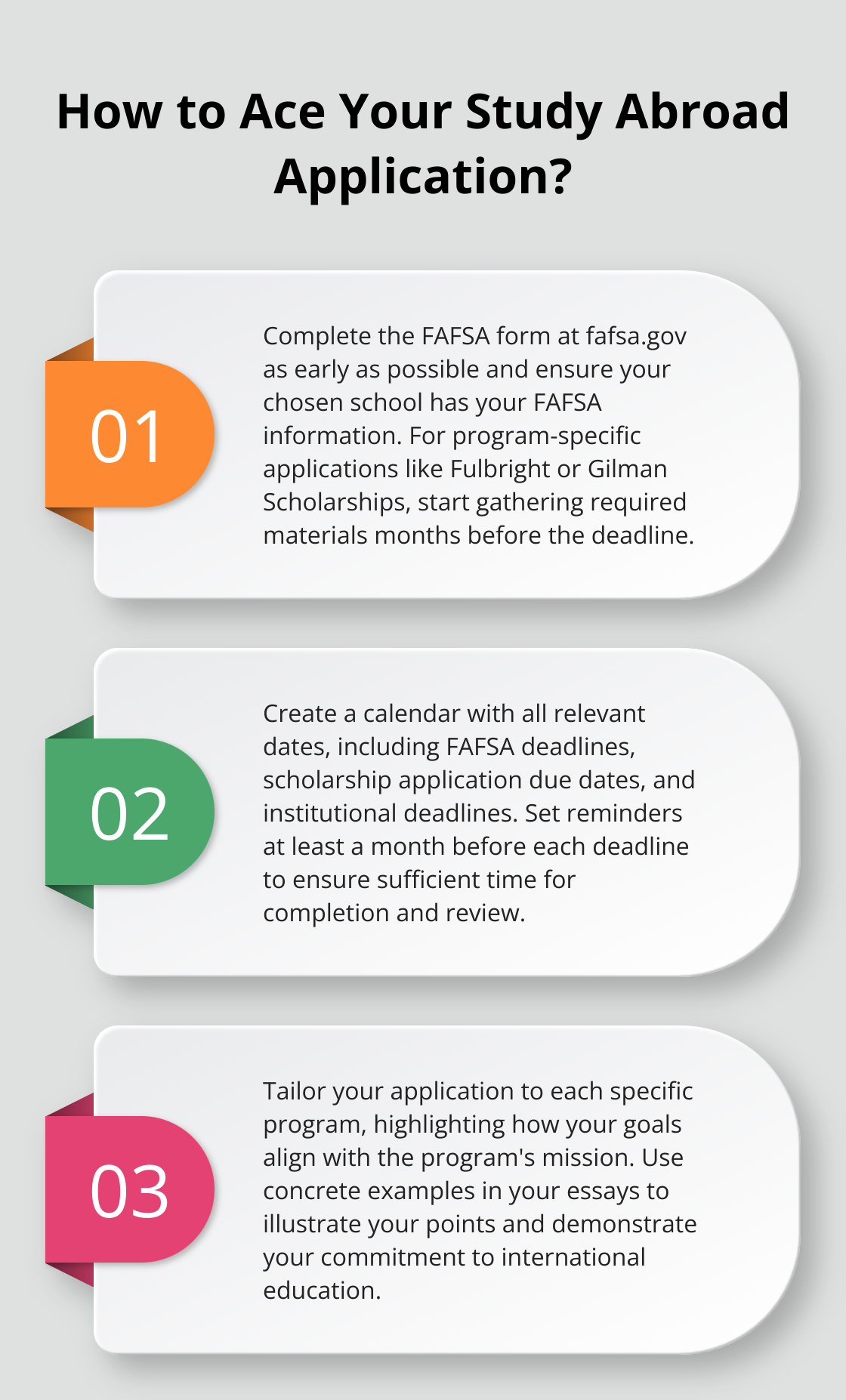
The Free Application for Federal Student Aid (FAFSA) opens the door to most U.S. government loans for international study. Fill out a FAFSA form at fafsa.gov as early as possible. Make sure the school you plan to attend has your FAFSA information. Find out the next steps from your chosen institution.
Prepare Program-Specific Applications
While the FAFSA is necessary for federal loans, other government-funded programs (such as the Fulbright or Gilman Scholarships) have their own application processes. These often require essays, letters of recommendation, and detailed study plans. For instance, the Gilman Scholarship application includes three essays composed in paragraph format, not as numbered responses.
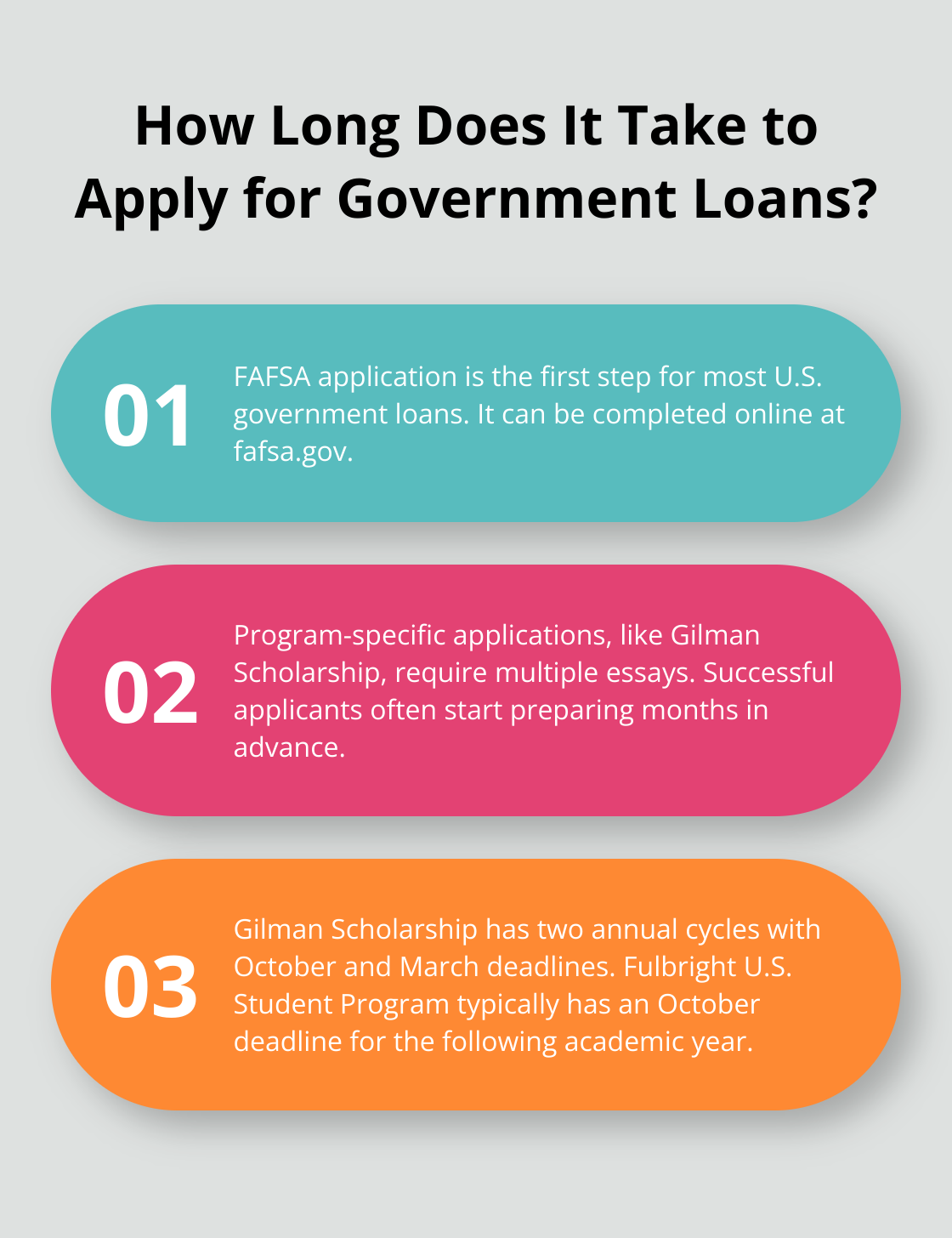
Start to gather these materials well before deadlines. Many successful applicants begin to prepare months before the due date. This extra time allows for multiple revisions and feedback from mentors or advisors.
Meet Important Deadlines
A missed deadline can derail your entire funding plan. Create a calendar with all relevant dates, including FAFSA deadlines, scholarship application due dates, and any institutional deadlines for your home and host universities. Set reminders at least a month before each deadline to ensure you have enough time to complete and review your applications.
The Gilman Scholarship has two application cycles each year (typically with October and March deadlines). The Fulbright U.S. Student Program usually has an October deadline for the following academic year. Plan ahead to meet these various timelines.
Submit Strong Applications
Applying for government loans and scholarships is often competitive. Submit a strong, well-prepared application to increase your chances of securing funding for your international study experience. Try to tailor your application to each specific program, highlighting how your goals align with the program’s mission.
Pay close attention to essay prompts and word limits. Use concrete examples to illustrate your points and demonstrate your commitment to international education. Proofread your application multiple times (and ask others to review it as well) to catch any errors or inconsistencies.
Seek Professional Assistance
The complexity of these applications can overwhelm many students. Professional services (like Excel Beyond Borders) can help you navigate this process, ensure you meet all deadlines, and submit high-quality applications. These services often have experience with numerous successful applications and can provide valuable insights into what reviewers look for.
Final Thoughts
Government student loans for international study provide numerous opportunities for global education. These financial resources, including Federal Direct Loans, Fulbright Grants, FLAS Fellowships, and the Gilman Scholarship, can significantly reduce the cost of studying abroad. Each option has specific eligibility criteria based on citizenship, academic performance, financial need, and program details.
Students should start the application process early and maintain organization throughout. Creating a timeline, gathering documents in advance, and adhering to deadlines will improve chances of success. Compelling essays that align personal goals with program missions can strengthen applications, while a strong academic record and clear financial need can further enhance prospects.
At Excel Beyond Borders, we offer guidance through every step of the international education financing process. Our expert team can assist with identifying suitable loan programs, completing applications, and navigating visa requirements. With our support, you can focus on preparing for your international adventure while we handle the complexities of securing your funding.