At Excelbeyondborders, we understand the challenges African students face when seeking education loans to study abroad. Financing your international education can be complex, but it’s not impossible.
This guide will explore various options for education loans for African international students, including providers like MPOWER and Passage Educational Loans. We’ll walk you through the application process, eligibility criteria, and tips for managing your loan repayments.
What Are Your Education Loan Options?
Private Loans: Your Primary Option
As an African student, private loans will likely be your main funding source. These loans come from banks, online lenders, or specialized international student loan providers. MPOWER and Prodigy Finance are two popular choices that cater specifically to international students.
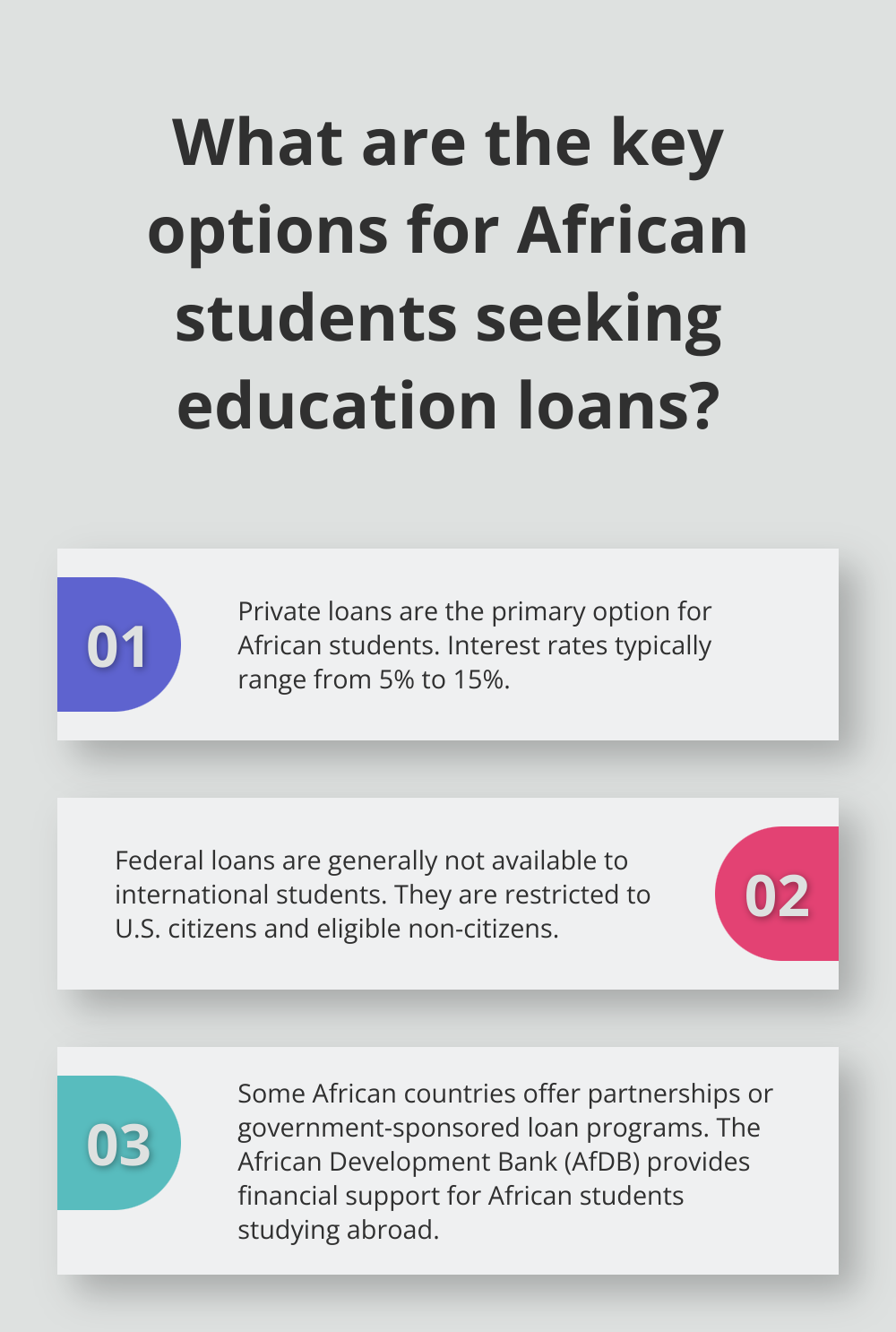
Private loans often have higher interest rates compared to federal loans (typically ranging from 5% to 15%). However, they offer more flexibility in terms of loan amounts and repayment terms. Some lenders, like MPOWER, don’t require a cosigner or collateral, which can be a significant advantage for many African students.
Federal Loans: Limited Availability
Federal loans, offered by the U.S. government, are generally not available to international students. These loans typically have lower interest rates and more favorable repayment terms, but they’re restricted to U.S. citizens and eligible non-citizens.
In rare cases, if you have a U.S. citizen or permanent resident cosigner, you might be eligible for certain federal loan programs. However, this is not common and shouldn’t be your primary focus when exploring loan options.
Country-Specific Programs
Some African countries have partnerships with foreign educational institutions or government-sponsored loan programs for students studying abroad. For example, the African Development Bank (AfDB) offers financial support for African students pursuing higher education internationally.
Check with your home country’s education ministry or financial institutions for any such programs. These can sometimes offer more favorable terms than standard international student loans.
Eligibility Criteria: What You Need to Know
Securing an education loan as an African student studying abroad involves meeting specific eligibility criteria:
-
Admission to an accredited institution: You’ll need proof of acceptance to a recognized university or college.
-
Academic performance: Strong academic records can improve your chances of loan approval and potentially lead to better terms.
-
Field of study: Some lenders favor STEM fields or programs with high employability rates.
-
Cosigner requirements: While not always necessary, having a creditworthy cosigner (often a U.S. citizen or permanent resident) can significantly improve your loan terms.
-
Proof of financial stability: Lenders may require evidence that you or your family can cover living expenses not covered by the loan.
-
Visa status: A valid student visa is typically required before loan disbursement.
Navigating Your Options
Understanding these various loan options and eligibility criteria is just the first step. The next crucial phase involves preparing a strong loan application that maximizes your chances of approval. Let’s explore how you can build a compelling case for lenders and increase your odds of securing the financial support you need for your international education journey.
How to Prepare a Winning Loan Application
Gather Essential Documents
Start by collecting all necessary documents. These typically include:
- Proof of admission from your chosen university
- Academic transcripts and standardized test scores (SAT, ACT, GRE, GMAT)
- A copy of your passport and student visa
- Financial statements showing your ability to cover living expenses
- A detailed budget outlining your expected costs for tuition, housing, and other expenses
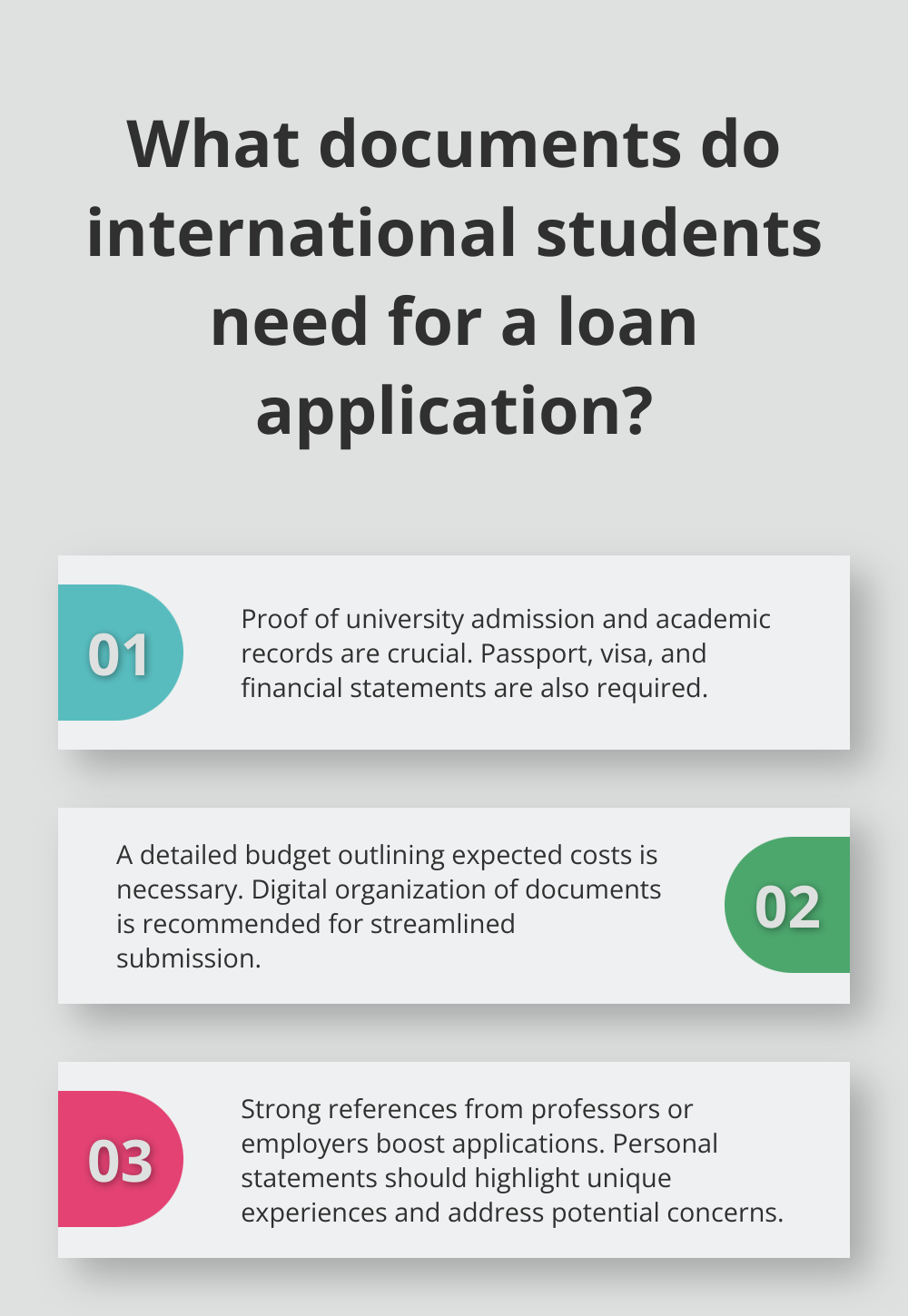
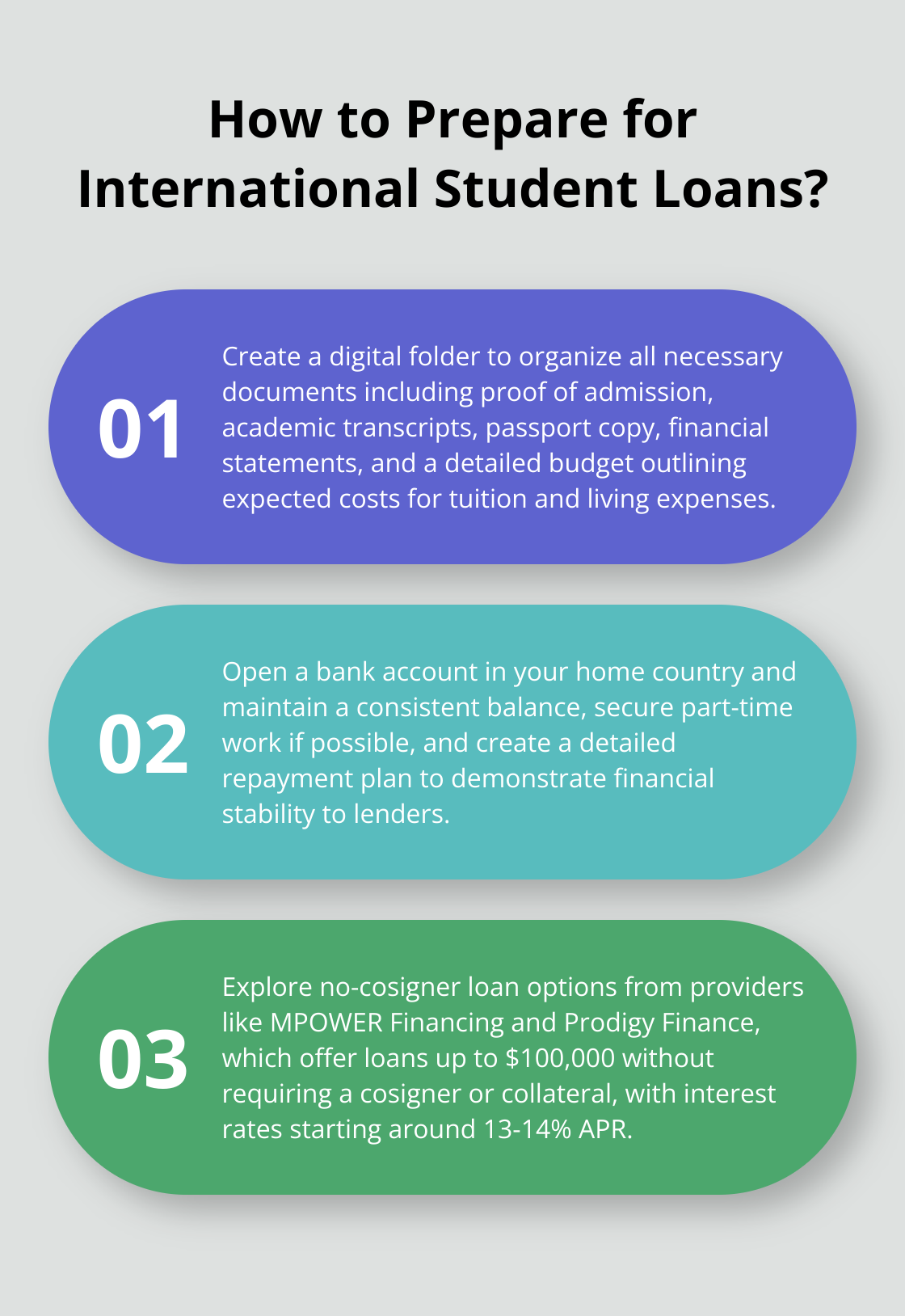
Pro tip: Create a digital folder to organize these documents. Many lenders prefer electronic submissions, and having everything in one place will streamline your application process.
Strengthen Your Financial Profile
Lenders want assurance that you can repay the loan. Here’s how to demonstrate financial stability:
- Open a bank account in your home country and maintain a consistent balance
- Secure part-time work or internships to show income potential (if possible)
- Create a detailed repayment plan showing how you’ll manage loan payments after graduation
Explore Cosigner Options
Many lenders require a cosigner, typically a U.S. citizen or permanent resident with good credit. If you have a relative or close friend who fits this criteria, approach them early in the process.
However, if finding a cosigner proves challenging, don’t despair. Lenders like Prodigy Finance and MPOWER offer no-cosigner loans for international students. These loans often have higher interest rates but can provide a lifeline for students without U.S. connections.
Craft a Compelling Personal Statement
Your personal statement is your chance to stand out. Use it to:
- Mention a personal experience that attracted you to your field of study and has shaped your dedication
- Highlight any unique skills or experiences that make you a good investment
- Address any potential red flags in your application proactively
Leverage Professional References
Strong references can significantly boost your application. Seek recommendations from:
- Professors who can speak to your academic potential
- Employers who can attest to your work ethic and reliability
- Community leaders who can vouch for your character
Quality matters more than quantity (one detailed, personalized reference is more valuable than several generic ones).
With a strong application in hand, you’re ready to explore the top loan options available for African students. Let’s examine some of the best providers and programs tailored to your unique needs as an international student.
Where Can African Students Find the Best Loan Options?
International Student Loan Providers
MPOWER Financing offers a top choice for African students. They provide loans up to $100,000 without cosigner or collateral requirements. Their interest rates (starting at 13.98% fixed APR) compete well in the no-cosigner loan market. MPOWER also offers career support and visa guidance.
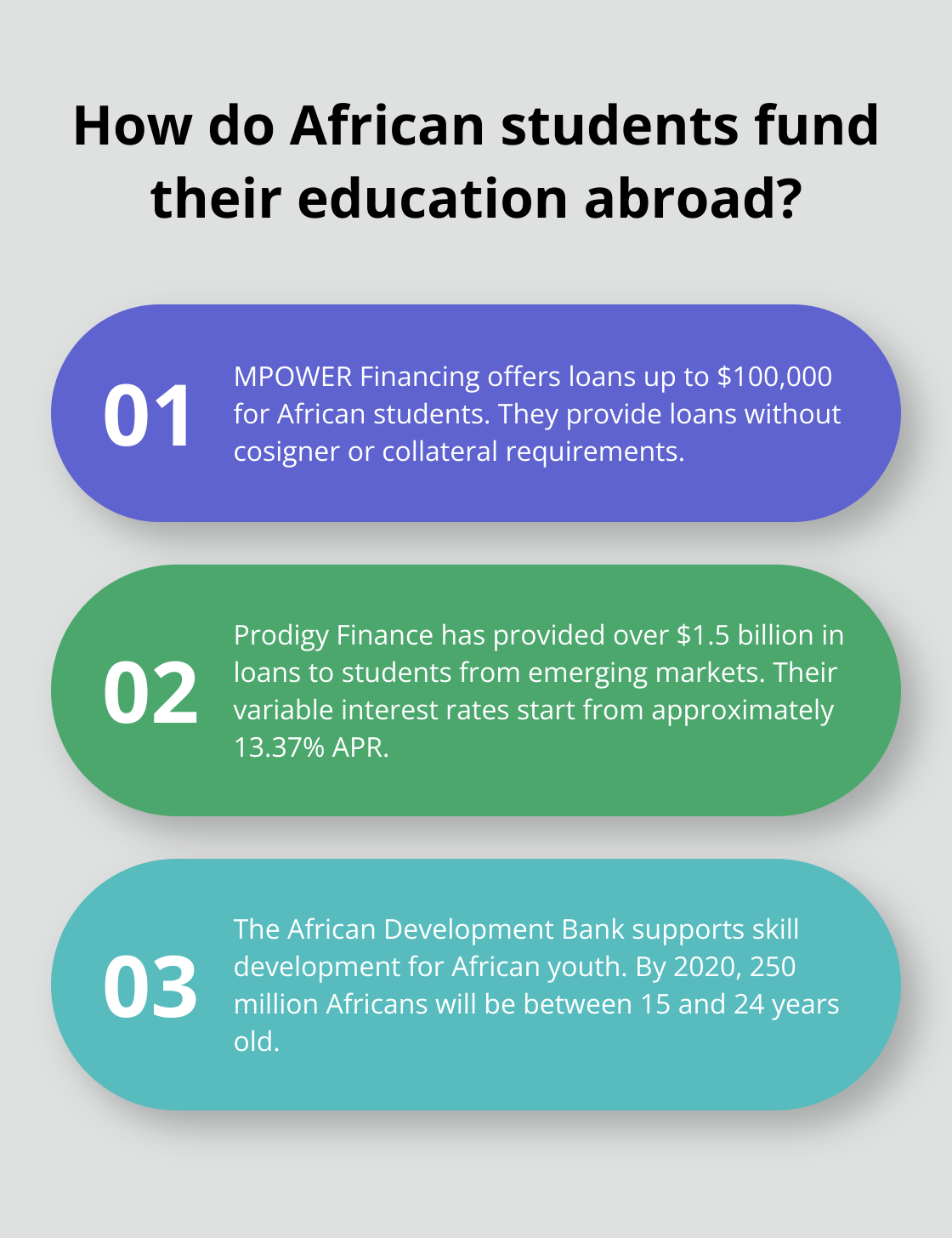
Prodigy Finance serves as another excellent option, particularly for graduate students at prestigious universities. They have provided over $1.5 billion in loans to students from emerging markets (including many African countries). Their variable interest rates start from approximately 13.37% APR.
Students with a U.S. cosigner might consider Ascent Student Loans. They offer more favorable terms, with rates as low as 5.48% APR for variable rate loans (significantly reducing overall borrowing costs).
Country-Specific Programs for African Students
The African Development Bank (AfDB) strives to help African youth develop the skills to find jobs. By 2020, 250 million Africans will be between 15 and 24 years old.
Nigeria’s Bank of Industry (BOI) offers an Education Loan Scheme with interest rates as low as 5% per annum. This program caters specifically to Nigerian students pursuing higher education abroad.
Kenya’s Higher Education Loans Board (Helb) provides loans for Kenyan students studying overseas. While loan amounts typically fall below those of international providers, they can serve as a valuable supplementary funding source.
Scholarships and Grants to Supplement Loans
The Mastercard Foundation Scholars Program offers full scholarships to African students at partner universities worldwide. In 2022, they supported over 40,000 scholars (making it one of the largest scholarship programs for African students).
The Africa-America Institute (AAI) provides various scholarship opportunities for African students. Their Transformational Leadership Program, for instance, offers full scholarships for master’s degrees in STEM fields at U.S. universities.
The Aga Khan Foundation International Scholarship Programme awards a limited number of scholarships each year for postgraduate studies. These scholarships target outstanding students from select developing countries who lack other means of financing their studies.
Excel Beyond Borders: Your Comprehensive Support
While exploring these options, consider Excel Beyond Borders as your ultimate partner for global education opportunities. We offer expert assistance in accessing study loans, securing scholarships, and navigating the complex world of international education financing. Our specialized services (including a 20% discount on international flights) can help you overcome financial barriers and achieve your international education goals.
Final Thoughts
Education loans to study abroad for African international students require careful planning and research. MPOWER International Student Loans and Passage Educational Loans offer viable options for those seeking financial support. African students must prepare strong applications, including necessary documents and compelling personal statements, to increase their chances of loan approval.
Loan repayment management demands strategic budgeting and consideration of part-time work opportunities. Many lenders provide grace periods after graduation, allowing time to secure employment before repayments begin. Students should maintain open communication with their lenders and explore alternative repayment plans if financial difficulties arise.
International education opens doors to new cultures, perspectives, and career opportunities. At Excel Beyond Borders, we support African students throughout their international education journey. We offer assistance with applications, visa coaching, and flight discounts to help students navigate the process and achieve their educational aspirations.